One from the archives... I printed it out yesterday to stick on the wall. It's not one I've shared before.
Showing posts with label Cambodia. Show all posts
Showing posts with label Cambodia. Show all posts
Sunday, 29 May 2011


Thursday, 16 December 2010
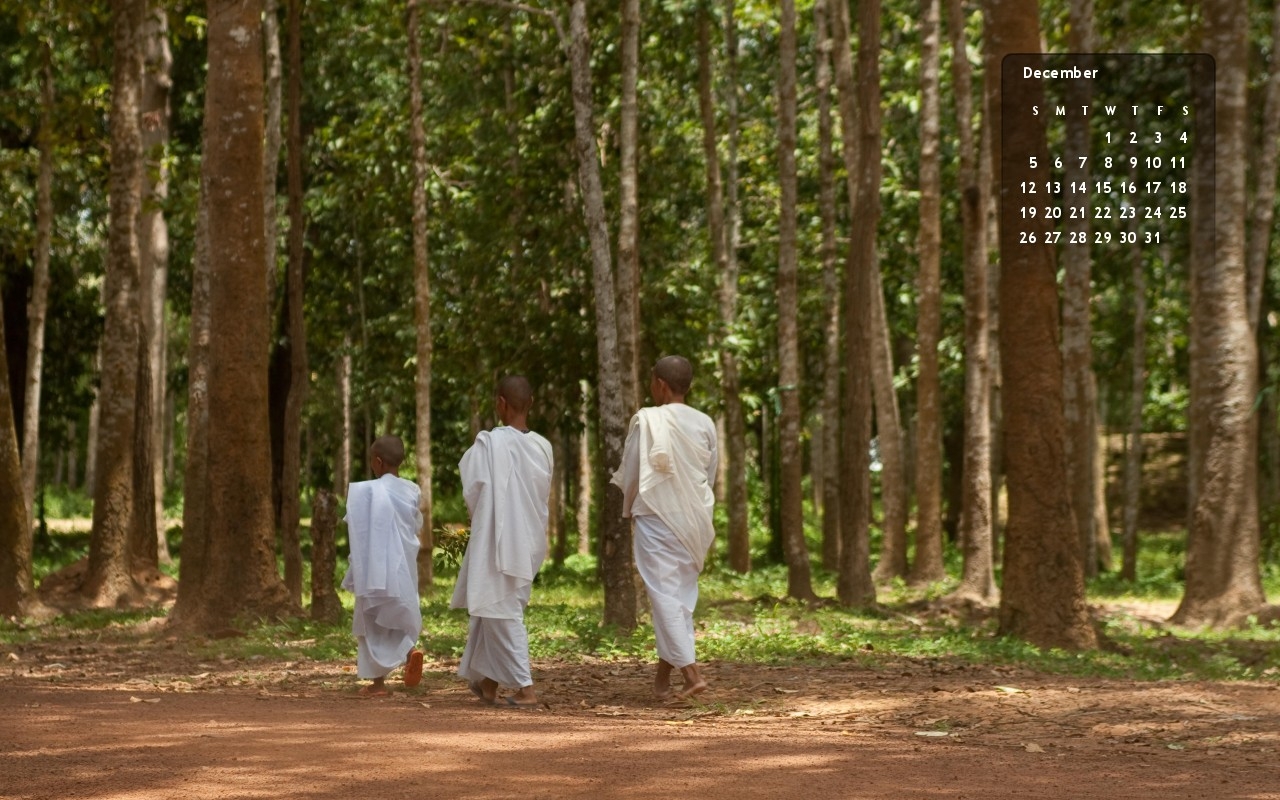
December 2010 Desktop - Siem Reap Lady Monks

Here is a free desktop wallpaper for December 2010. The picture was taken in Siem Reap, Cambodia.
Click here for image
more at www.moodtotravel.blogspot.com
Tuesday, 11 May 2010
Featured Travel Photo

Tuesday, 6 April 2010
Featured Travel Photo

As we were leaving the Bayon temple in Angkor I could hear chanting and drums. I went to investigate and this is what I saw.

Tuesday, 23 March 2010

Monday, 1 February 2010

Saturday, 8 August 2009
Crossing the border between Cambodia and Laos
Both of us were sorry to leave Norden House in Ban Lung but really pleased to be on our way away from the constant rain. All our stuff was wet and starting to smell as nothing was drying in the damp environment. My shorts had been wet the entire time we had been there, after the perilous Moto ride in the rain to the hotel on the first night.
In the guide book it says that crossing the border into Laos in the north at Voen Kham is for the adventurous. It did take 3 buses, a walk on foot over no mans land and two sets of ‘bribes’ but other than that it was really straightforward.
We’d got our Laos visas back in Phnom Penh at $45 each (it costs more for the Brits for some reason) but we knew that at the border it was useful to have some $1 bills handy to ease the path across. Interestingly you can take the name of the officer who asks for the extra money at the border and complain but we thought we’d rather get across into Laos.
I still thought of ourselves as adventurous having made it across the border and as we drove away into Laos I was a little surprised to see a golf course and luxury holiday resort. It turns out that the area in Laos is very close to the Thai border and it is one of the most visited areas by the Thais on holiday due to some major attractions.
The final leg of our journey to our first destination in Laos was by boat, or that’s what we thought. We got the boat over to an island called Don Det as planned and were going to walk over the disused railway bridge built by the French to another island, Don Khon. Our packs are definitely not the lightest at about 20kg each and the prospect of carrying them more than a few hundred metres was not appealing and on the map it looked straightforward and not too far.
We started to walk through the rice fields avoiding the odd buffalo and barking dog. It didn’t take long for me to build up a healthy sweat as it was definitely the most humid place we have stayed- I guess an island surrounded by water during the monsoon would be a good candidate.
After a couple of pit stops we spotted water and what looked like a bridge as we approached. I jokingly said ‘wouldn’t it be funny if the bridge no longer existed’. As we got closer it became all too apparent that the bridge did not exist anymore, it just stopped a few meters into the water. Sweating, hot and tired both of us weren’t in the best of moods but we just about held it together and managed to find a boatman to take us over to the island we wanted to get to for an extortionate price.
As we set off in the boat heading in completely the opposite direction to what we expected, we made sure with the boatman that he had understood where we wanted to go. He definitely had, as a couple of minutes into the boat ride we turned a corner in the river around the island and in front of us was the bridge that linked the islands of Don Det and Don Khon. All we could do was smile at each other.
We could have stayed on the first island but wanted to stay at a particular guesthouse and that’s where we were dropped off. As we wandered through the courtyard of the guesthouse no one seemed too bothered and there were none of the usual offers of ‘do you want to see a room?’. I asked whether a room was available and I was told they were full. We did eventually find a room at the Auberge Sala Don Khone - a lovely place even if the bathroom smelt of cabbage.
The Island itself forms part of Si Phan Don (4000 Islands) and is supposed to be the most laid back place in Laos. It was laid back but greed had definitely struck as the prices for food and boat hire were extortionate, but despite the cost we did have a lovely time there.
After our successful cycle ride in Kratie we hired bikes again and toured both the islands. It was a little bit muddier this time and some of the routes were impassable. We were stopped by some fellow travellers who were covered head to foot in mud warning us not to go down a particular track. We had a great time even if we were a little muddier by the end. I did also get a bite on the foot - I think it was a spider but not sure. The foot’s swelling up nicely and at the moment it’s really painful to walk on. It’s not spreading so I’m keeping an eye on it and hopefully the swelling will start to ease soon.
There are some huge rapids along the Mekong and we took a day trip to see the largest set in South East Asia according the blurb on a tourist sign. I’m not sure if they are but with the monsoon rain you could hear them from quite a distance away. As you got closer the thunderous sound was all-encompassing and I can see why it’s one of the most visited sites in Laos, especially by the Thais. It holds a sacred significance as well, with the idea being that all the bad spirits are trapped in the rapids.
I think Laos will be something of an acquired taste, so far it’s like Cambodia but to coin the phrase you hear a lot here – ‘Same same but different’

In the guide book it says that crossing the border into Laos in the north at Voen Kham is for the adventurous. It did take 3 buses, a walk on foot over no mans land and two sets of ‘bribes’ but other than that it was really straightforward.
We’d got our Laos visas back in Phnom Penh at $45 each (it costs more for the Brits for some reason) but we knew that at the border it was useful to have some $1 bills handy to ease the path across. Interestingly you can take the name of the officer who asks for the extra money at the border and complain but we thought we’d rather get across into Laos.
I still thought of ourselves as adventurous having made it across the border and as we drove away into Laos I was a little surprised to see a golf course and luxury holiday resort. It turns out that the area in Laos is very close to the Thai border and it is one of the most visited areas by the Thais on holiday due to some major attractions.
The final leg of our journey to our first destination in Laos was by boat, or that’s what we thought. We got the boat over to an island called Don Det as planned and were going to walk over the disused railway bridge built by the French to another island, Don Khon. Our packs are definitely not the lightest at about 20kg each and the prospect of carrying them more than a few hundred metres was not appealing and on the map it looked straightforward and not too far.

We started to walk through the rice fields avoiding the odd buffalo and barking dog. It didn’t take long for me to build up a healthy sweat as it was definitely the most humid place we have stayed- I guess an island surrounded by water during the monsoon would be a good candidate.
After a couple of pit stops we spotted water and what looked like a bridge as we approached. I jokingly said ‘wouldn’t it be funny if the bridge no longer existed’. As we got closer it became all too apparent that the bridge did not exist anymore, it just stopped a few meters into the water. Sweating, hot and tired both of us weren’t in the best of moods but we just about held it together and managed to find a boatman to take us over to the island we wanted to get to for an extortionate price.
As we set off in the boat heading in completely the opposite direction to what we expected, we made sure with the boatman that he had understood where we wanted to go. He definitely had, as a couple of minutes into the boat ride we turned a corner in the river around the island and in front of us was the bridge that linked the islands of Don Det and Don Khon. All we could do was smile at each other.

We could have stayed on the first island but wanted to stay at a particular guesthouse and that’s where we were dropped off. As we wandered through the courtyard of the guesthouse no one seemed too bothered and there were none of the usual offers of ‘do you want to see a room?’. I asked whether a room was available and I was told they were full. We did eventually find a room at the Auberge Sala Don Khone - a lovely place even if the bathroom smelt of cabbage.
The Island itself forms part of Si Phan Don (4000 Islands) and is supposed to be the most laid back place in Laos. It was laid back but greed had definitely struck as the prices for food and boat hire were extortionate, but despite the cost we did have a lovely time there.

After our successful cycle ride in Kratie we hired bikes again and toured both the islands. It was a little bit muddier this time and some of the routes were impassable. We were stopped by some fellow travellers who were covered head to foot in mud warning us not to go down a particular track. We had a great time even if we were a little muddier by the end. I did also get a bite on the foot - I think it was a spider but not sure. The foot’s swelling up nicely and at the moment it’s really painful to walk on. It’s not spreading so I’m keeping an eye on it and hopefully the swelling will start to ease soon.
There are some huge rapids along the Mekong and we took a day trip to see the largest set in South East Asia according the blurb on a tourist sign. I’m not sure if they are but with the monsoon rain you could hear them from quite a distance away. As you got closer the thunderous sound was all-encompassing and I can see why it’s one of the most visited sites in Laos, especially by the Thais. It holds a sacred significance as well, with the idea being that all the bad spirits are trapped in the rapids.

I think Laos will be something of an acquired taste, so far it’s like Cambodia but to coin the phrase you hear a lot here – ‘Same same but different’
Friday, 7 August 2009
Treks and Jungles and Rain!
In every country we manage to find the wettest spot to spend some time. I suppose it has to happen at some point, but in Ban Lung it has rained nearly non-stop for the past three days. We had planned to spend five nights here, but we’ve decided to cut it short by one owing to the bad weather. Of course, as soon as we made that decision and bought our tickets out of here, the weather brightened up somewhat. Typical!
We had a reasonably uneventful bus journey from Kratie to Ban Lung, with the bus leaving at 1pm. We were slightly apprehensive as that would mean we’d arrive in Ban Lung in the dark – the journey was just over 5 hours long in total. The journey was fine until we passed the town of Stung Treng near the Lao border – after that we passed into “unsealed road” territory, and the ride got a lot more bumpy. After being thrown around in our seats for about 3 hours, and watching the carrot coloured slush fly past the bus windows as we drove through the red mud, we arrived in Ban Lung – the small provincial capital of the Ratanakiri district in north-east Cambodia. Our bags were unceremoniously dumped out of the back of the bus into the mud, and we were thrown into the usual mix of slightly desperate moto-drivers and guesthouse touts, all wanting our business. Eventually, we managed to persuade two moto-drivers to drive us 4km out of town to Norden House, our chosen hotel.
After a motorbike ride similar to that-one-where-we-thought-we-would-die in Mandrem, Goa (India), in which my backpack slid around on the bike, the driver negotiated crater-sized pot-holes, and it started pouring with rain, we arrived at Norden House, fronted by a nicely lit up (but empty) restaurant. We quickly discovered that we were the only guests at the hotel, and that the internet connection (one of the reasons we’d chosen the hotel) was not working due to satellite issues. However, as it was pouring with rain, we resolved to spend the night there and move on the next day. We enjoyed one of our nicest meals in Cambodia to date in the restaurant, had attention lavished upon us by the staff, and then went off to our bungalow with a free DVD in tow to watch on the DVD player.
The following day we ended up staying in Norden House, as we decided that despite not being what we expected, it was a lovely place and met our needs well. No other guests arrived, and over time we’ve started to think of it as “our hotel”! On our first full day in Ban Lung we visited Boeng Yeak Lom, a volcanic crater lake (or meteor impact crater depending on who you ask), just down the road from our hotel. We had a swim in the clean light green/blue coloured water, and then walked around the perimeter of the lake, trying to ignore the persistent showers which followed us around. The lake was well worth the visit, and we were determined to make a return trip to it in order to have another swim, but we have not quite made it back unfortunately.
Also on that day, we organised to do a trek in the jungle with a guide in Ban Lung – he was to pick up the two of us the following day, take us on an amble through the jungle, provide us with a tasty lunch and then walk us back to the bikes and take us back to town. Well, that night it poured with rain, and we half expected that he would not turn up in the morning – so we were relieved but not particularly pleased to see him waiting for us in the rain the next day. The trek was a nightmare – I wouldn’t do it again. We didn’t really have much concept as to what we should expect – I hadn’t really thought about it, but I guess I was expecting a walk through the woods. Well, we rode to the place the trek was due to start on the back of two motos. Even before we got there I was already wet up my arms, despite wearing my waterproof jacket and trousers. Despite this, I was completely determined that I would not get any wetter – surely the water had just gone up my sleeves after all.
The rain continued, and we walked downhill through small trees towards the jungle. Within half an hour, we came across our first stream – well, actually, it was a river. There was only one way to get across – by fallen tree. We were a little nervous at this unexpected turn of events, but our guide helped us across – no problem. However, I managed to drop my water bottle into the river while crossing, which was a bit disastrous – so we were now down to 2/3rds of our water! We continued on and entered the jungle. The rain also continued on, and it was starting to get further into my rain jacket. A weird-looking breed of fly was also starting to turn up, and was biting bare skin where it could find it – I suffered a few bites on my hands and neck.
Next, we came across an even bigger river – and this one had no tree to cross! We were both a bit surprised as our guide hadn’t mentioned that we would be crossing rivers. We didn’t want to get our boots wet, so we took them off for the crossing, and waded through up to our knees in water. On the other side of the river, we wiped our feet dry and put our boots back on – my socks were a little wet, but not too bad. However, within a few metres of leaving the river we both stepped into a deep puddle, halfway up to our knees, letting water into our boots. How frustrating after all the effort we’d put in! When we came to the next, even larger, river, we decided to just keep our boots on for the crossing as they were already wet – but, as we discovered, they weren’t THAT wet yet! Once we stepped into the river, they quickly got soaked.
By this point we were completely wet, and as the rain went on, and we crossed more swollen rivers, we did not get any drier. At around lunchtime the rain stopped in time for us to eat, but the humidity persisted. With the sweat that resulted, it was very difficult to get dry, particularly as every river we crossed seemed to get deeper and faster. The final river was the most difficult, and the three of us had to hold hands to cross so we did not get swept away! By the end of the day we were completely knackered – I barely even had the energy to smile for our photo at the end!
So that was the main story of our trip to Ban Lung. The following day we did nothing – we had to rest! Ban Lung is definitely an up-and-coming tourist destination – in a few years when the road is sealed and there are a few more hotels and restaurants it will be big business. For now, it is still a small and relatively sleepy town, and the hills surrounding it make it particularly wet at this time of year. Despite the rain, I have enjoyed it – it’s been an experience!

We had a reasonably uneventful bus journey from Kratie to Ban Lung, with the bus leaving at 1pm. We were slightly apprehensive as that would mean we’d arrive in Ban Lung in the dark – the journey was just over 5 hours long in total. The journey was fine until we passed the town of Stung Treng near the Lao border – after that we passed into “unsealed road” territory, and the ride got a lot more bumpy. After being thrown around in our seats for about 3 hours, and watching the carrot coloured slush fly past the bus windows as we drove through the red mud, we arrived in Ban Lung – the small provincial capital of the Ratanakiri district in north-east Cambodia. Our bags were unceremoniously dumped out of the back of the bus into the mud, and we were thrown into the usual mix of slightly desperate moto-drivers and guesthouse touts, all wanting our business. Eventually, we managed to persuade two moto-drivers to drive us 4km out of town to Norden House, our chosen hotel.
After a motorbike ride similar to that-one-where-we-thought-we-would-die in Mandrem, Goa (India), in which my backpack slid around on the bike, the driver negotiated crater-sized pot-holes, and it started pouring with rain, we arrived at Norden House, fronted by a nicely lit up (but empty) restaurant. We quickly discovered that we were the only guests at the hotel, and that the internet connection (one of the reasons we’d chosen the hotel) was not working due to satellite issues. However, as it was pouring with rain, we resolved to spend the night there and move on the next day. We enjoyed one of our nicest meals in Cambodia to date in the restaurant, had attention lavished upon us by the staff, and then went off to our bungalow with a free DVD in tow to watch on the DVD player.

The following day we ended up staying in Norden House, as we decided that despite not being what we expected, it was a lovely place and met our needs well. No other guests arrived, and over time we’ve started to think of it as “our hotel”! On our first full day in Ban Lung we visited Boeng Yeak Lom, a volcanic crater lake (or meteor impact crater depending on who you ask), just down the road from our hotel. We had a swim in the clean light green/blue coloured water, and then walked around the perimeter of the lake, trying to ignore the persistent showers which followed us around. The lake was well worth the visit, and we were determined to make a return trip to it in order to have another swim, but we have not quite made it back unfortunately.

Also on that day, we organised to do a trek in the jungle with a guide in Ban Lung – he was to pick up the two of us the following day, take us on an amble through the jungle, provide us with a tasty lunch and then walk us back to the bikes and take us back to town. Well, that night it poured with rain, and we half expected that he would not turn up in the morning – so we were relieved but not particularly pleased to see him waiting for us in the rain the next day. The trek was a nightmare – I wouldn’t do it again. We didn’t really have much concept as to what we should expect – I hadn’t really thought about it, but I guess I was expecting a walk through the woods. Well, we rode to the place the trek was due to start on the back of two motos. Even before we got there I was already wet up my arms, despite wearing my waterproof jacket and trousers. Despite this, I was completely determined that I would not get any wetter – surely the water had just gone up my sleeves after all.

The rain continued, and we walked downhill through small trees towards the jungle. Within half an hour, we came across our first stream – well, actually, it was a river. There was only one way to get across – by fallen tree. We were a little nervous at this unexpected turn of events, but our guide helped us across – no problem. However, I managed to drop my water bottle into the river while crossing, which was a bit disastrous – so we were now down to 2/3rds of our water! We continued on and entered the jungle. The rain also continued on, and it was starting to get further into my rain jacket. A weird-looking breed of fly was also starting to turn up, and was biting bare skin where it could find it – I suffered a few bites on my hands and neck.

Next, we came across an even bigger river – and this one had no tree to cross! We were both a bit surprised as our guide hadn’t mentioned that we would be crossing rivers. We didn’t want to get our boots wet, so we took them off for the crossing, and waded through up to our knees in water. On the other side of the river, we wiped our feet dry and put our boots back on – my socks were a little wet, but not too bad. However, within a few metres of leaving the river we both stepped into a deep puddle, halfway up to our knees, letting water into our boots. How frustrating after all the effort we’d put in! When we came to the next, even larger, river, we decided to just keep our boots on for the crossing as they were already wet – but, as we discovered, they weren’t THAT wet yet! Once we stepped into the river, they quickly got soaked.

By this point we were completely wet, and as the rain went on, and we crossed more swollen rivers, we did not get any drier. At around lunchtime the rain stopped in time for us to eat, but the humidity persisted. With the sweat that resulted, it was very difficult to get dry, particularly as every river we crossed seemed to get deeper and faster. The final river was the most difficult, and the three of us had to hold hands to cross so we did not get swept away! By the end of the day we were completely knackered – I barely even had the energy to smile for our photo at the end!

So that was the main story of our trip to Ban Lung. The following day we did nothing – we had to rest! Ban Lung is definitely an up-and-coming tourist destination – in a few years when the road is sealed and there are a few more hotels and restaurants it will be big business. For now, it is still a small and relatively sleepy town, and the hills surrounding it make it particularly wet at this time of year. Despite the rain, I have enjoyed it – it’s been an experience!
Monday, 3 August 2009
We thought it was a simple journey
After the temple overload at Angkor we’ve made it by 3 buses and 12 hours later to a sleepy town in the Northwest of Cambodia called Kratie. It’s on the way to the Laos border where we are headed slowly.
Getting here was more complicated than either of us thought as we thought we’d bought a ticket for a bus that took us all the way here. The journey started off straight forward enough at 7am. About 11am we stopped for a pee break and food and when we got back on the bus and headed off there was a commotion at the front. It later transpired when we were stopped at the local police station that a tourist had left his day pack on the bus when we had stopped and now it was a little lighter. It was missing one camera and two iPods!
We all had to get off and our bags were searched but the thief was long gone as nothing was found. We stopped again later on and the bus driver shouted something in Khmer from the front. I don’t know what made me go and check but I did, and once I got over to him where we were headed, he gesticulated for us to get off quickly and get to on another bus. This bus we thought now headed to Kratie but once it got to Kampong Cham we were told we had to buy another bus ticket and also pay a Tuk Tuk driver to get to another bus station. I was not having any of this and the guy who was being helpful at first got ruder and ruder as he did not get his way. We did get to the next bus stop and did get another ticket but we did not pay another penny.
The final bus we had to get on was due at 2pm. We waited. At abut 2:45 we started to feel as though we had been had and that we were going nowhere fast. After a couple of enquiries I was told the bus was 5 mins away. At about 3:15 it arrived and we got on.
The rest was uneventful, a bit like Kratie. There is nothing to do here so we have taken it easy. We did get the local ferry across the river to an island which has no cars. We cycled round for a couple of very relaxing hours and then made our way back.
We’ve got a lovely room at Oudom Sambath Hotel, the only downside it the water is a little on the murky side. After the first night we did look elsewhere and on balance for what we are paying this was the best. The water has got better the longer we’ve stayed but at any point it can change to the colour of the muddy Mekong river which it overlooks. Taking a shower can be a bit dicey!

Getting here was more complicated than either of us thought as we thought we’d bought a ticket for a bus that took us all the way here. The journey started off straight forward enough at 7am. About 11am we stopped for a pee break and food and when we got back on the bus and headed off there was a commotion at the front. It later transpired when we were stopped at the local police station that a tourist had left his day pack on the bus when we had stopped and now it was a little lighter. It was missing one camera and two iPods!
We all had to get off and our bags were searched but the thief was long gone as nothing was found. We stopped again later on and the bus driver shouted something in Khmer from the front. I don’t know what made me go and check but I did, and once I got over to him where we were headed, he gesticulated for us to get off quickly and get to on another bus. This bus we thought now headed to Kratie but once it got to Kampong Cham we were told we had to buy another bus ticket and also pay a Tuk Tuk driver to get to another bus station. I was not having any of this and the guy who was being helpful at first got ruder and ruder as he did not get his way. We did get to the next bus stop and did get another ticket but we did not pay another penny.

The final bus we had to get on was due at 2pm. We waited. At abut 2:45 we started to feel as though we had been had and that we were going nowhere fast. After a couple of enquiries I was told the bus was 5 mins away. At about 3:15 it arrived and we got on.
The rest was uneventful, a bit like Kratie. There is nothing to do here so we have taken it easy. We did get the local ferry across the river to an island which has no cars. We cycled round for a couple of very relaxing hours and then made our way back.

We’ve got a lovely room at Oudom Sambath Hotel, the only downside it the water is a little on the murky side. After the first night we did look elsewhere and on balance for what we are paying this was the best. The water has got better the longer we’ve stayed but at any point it can change to the colour of the muddy Mekong river which it overlooks. Taking a shower can be a bit dicey!
Wednesday, 29 July 2009
The splendor of Angkor
We spent just over a week in Siem Reap, and on most of the days we were there we toured around various temple sites in the area of Angkor. Some were closer to Siem Reap than others, but our lives were made easier by having a friendly, flexible and helpful tuk tuk driver to show us around!
Soviet was very good, and if anyone’s going to Siem Reap anytime soon then let us know and we’ll put you in touch with him. He normally hangs around next to the market near the river, and a lot of the times we walked past him he was practising his English in a scrapbook – so don’t go with one of those drivers who shout out “You want tuk tuk?” – go with him!
On our first day of temples, Soviet took us on the traditional “short circuit” of temples, a 17km loop starting with Angkor Wat, and working in a loop through Angkor Thom, Ta Prohm and a number of other temples in between. We started with sunrise at the not-so-traditional starting point of Phnom Bakheng, which has a decent view of Angkor Wat and the surrounding countryside. Unfortunately, the sunrise was not great – it was a cloudy day. It was also the day of the eclipse across much of south-east Asia, and although it would only have been a partial eclipse in Cambodia, this may still have affected the light levels. However, the mist rising off of the surrounding jungle, the lack of people around and the soft light made it a very atmospheric start to the day.
Following this, we made our first trip to Angkor Wat of the week. It was very quiet there so early in the morning, and it was good to wander around the complex in peace. Although much of it has been restored, it’s an impressive structure for one so old – but even more impressive are the carvings on the around the edge of the temple itself. Depicting Hindu legends, stories and deities, every carving is unique, and the whole thing is very interesting to view.
Following this, we went to a number of other temples, including Angkor Thom (Bayon and the Terrace of Elephants), and Ta Prohm – a partially restored temple which has giant trees towering over it, and growing into some of the walls – hugely impressive. Some of the smaller temples were very impressive as well – one of the common aspects of them was that they all have extremely steep steps leading to the top. Some of them are not for the faint of heart – a step wrong could send you tumbling down the side of the temple with nothing to stop you! We ended the day (covered in sweat) at Sra Srang, a large basin filled with water, opposite Banteay Kdei.
The first day was extremely tiring, even though we only finished our sight-seeing in the middle of the afternoon. The following day we did the “long circuit”, which takes in some of the sights we’d already seen such as Angkor Wat and Angkor Thom, as well as a wider range of temples in a 26km route further afield. One of the most impressive and unique sights on day two was Preah Neak Pean, a large series of basins with an odd statue of a horse with eight human legs. Preah Khan was also impressive – largely ruined, filled with corridors and original carvings. We finished the second day with another visit to Angkor Wat for sunset – but low-lying clouds meant it wasn’t the best sunset!
Following this, we had to have a day of rest because we were very tired (physically and of temples), but on the fourth day we arranged for Soviet to take us to Kbal Spean and Banteay Srei, much further afield than the temples we had already visited. Kbal Spean was one of the most impressive sights we’d seen. After a 1500m walk uphill through the jungle to reach it at 7:30am, we reached it – a river which had been paved with thousands of lingas, inscriptions and carvings. Although a lot of it has been worn or washed away, there is a lot still to see there, and combined with the early morning light and the lack of people, it was a very magical location. Banteay Srei was also good, but much busier and hotter by the time we got there.
On the fifth day, we visited another far-flung temple – Beng Melea. Famed for being unruly and overgrown, it was just that. We had a guide show us around the complex, which is largely in ruins and has not been restored at all. It did feel like the ultimate of “Indiana Jones” temples – being in ruins, it felt like you were exploring it for the first time even though there was an actual path leading through the ruins (albeit you had to duck and climb your way through). It was definitely a trip worth making.
On our final day exploring Angkor, we visited some of our favourite places again – Bayon, Ta Prohm and Angkor Wat. Bayon is brilliant, with giant faces of an ancient king covering the walls. In the late afternoon light, the faces really came out of the stone, giving you an impression of being watched. That evening, we finally had a worthy sunset at Angkor Wat – the colours were worth waiting for! We said goodbye to the temples of Angkor – sad, but slightly temple’d out!
Video of Bakong Temple:

Soviet was very good, and if anyone’s going to Siem Reap anytime soon then let us know and we’ll put you in touch with him. He normally hangs around next to the market near the river, and a lot of the times we walked past him he was practising his English in a scrapbook – so don’t go with one of those drivers who shout out “You want tuk tuk?” – go with him!
On our first day of temples, Soviet took us on the traditional “short circuit” of temples, a 17km loop starting with Angkor Wat, and working in a loop through Angkor Thom, Ta Prohm and a number of other temples in between. We started with sunrise at the not-so-traditional starting point of Phnom Bakheng, which has a decent view of Angkor Wat and the surrounding countryside. Unfortunately, the sunrise was not great – it was a cloudy day. It was also the day of the eclipse across much of south-east Asia, and although it would only have been a partial eclipse in Cambodia, this may still have affected the light levels. However, the mist rising off of the surrounding jungle, the lack of people around and the soft light made it a very atmospheric start to the day.

Following this, we made our first trip to Angkor Wat of the week. It was very quiet there so early in the morning, and it was good to wander around the complex in peace. Although much of it has been restored, it’s an impressive structure for one so old – but even more impressive are the carvings on the around the edge of the temple itself. Depicting Hindu legends, stories and deities, every carving is unique, and the whole thing is very interesting to view.

Following this, we went to a number of other temples, including Angkor Thom (Bayon and the Terrace of Elephants), and Ta Prohm – a partially restored temple which has giant trees towering over it, and growing into some of the walls – hugely impressive. Some of the smaller temples were very impressive as well – one of the common aspects of them was that they all have extremely steep steps leading to the top. Some of them are not for the faint of heart – a step wrong could send you tumbling down the side of the temple with nothing to stop you! We ended the day (covered in sweat) at Sra Srang, a large basin filled with water, opposite Banteay Kdei.

The first day was extremely tiring, even though we only finished our sight-seeing in the middle of the afternoon. The following day we did the “long circuit”, which takes in some of the sights we’d already seen such as Angkor Wat and Angkor Thom, as well as a wider range of temples in a 26km route further afield. One of the most impressive and unique sights on day two was Preah Neak Pean, a large series of basins with an odd statue of a horse with eight human legs. Preah Khan was also impressive – largely ruined, filled with corridors and original carvings. We finished the second day with another visit to Angkor Wat for sunset – but low-lying clouds meant it wasn’t the best sunset!

Following this, we had to have a day of rest because we were very tired (physically and of temples), but on the fourth day we arranged for Soviet to take us to Kbal Spean and Banteay Srei, much further afield than the temples we had already visited. Kbal Spean was one of the most impressive sights we’d seen. After a 1500m walk uphill through the jungle to reach it at 7:30am, we reached it – a river which had been paved with thousands of lingas, inscriptions and carvings. Although a lot of it has been worn or washed away, there is a lot still to see there, and combined with the early morning light and the lack of people, it was a very magical location. Banteay Srei was also good, but much busier and hotter by the time we got there.

On the fifth day, we visited another far-flung temple – Beng Melea. Famed for being unruly and overgrown, it was just that. We had a guide show us around the complex, which is largely in ruins and has not been restored at all. It did feel like the ultimate of “Indiana Jones” temples – being in ruins, it felt like you were exploring it for the first time even though there was an actual path leading through the ruins (albeit you had to duck and climb your way through). It was definitely a trip worth making.

On our final day exploring Angkor, we visited some of our favourite places again – Bayon, Ta Prohm and Angkor Wat. Bayon is brilliant, with giant faces of an ancient king covering the walls. In the late afternoon light, the faces really came out of the stone, giving you an impression of being watched. That evening, we finally had a worthy sunset at Angkor Wat – the colours were worth waiting for! We said goodbye to the temples of Angkor – sad, but slightly temple’d out!

Video of Bakong Temple:
Monday, 27 July 2009
The Biggest Surprise in Siem Reap
Siem Reap has been full of surprises over the last 8 days and the biggest has been the relationship we have built up with our Tuk Tuk driver. We went looking for a good to deal to take us round all the temples in Angkor and we found Soviet relaxing in his Tuk Tuk. Once we’d spoken to him and asked him how much he wanted to take us sightseeing, he left us alone to have a think about it and when we decided to walk away he did not start on any sales pitch but let us walk away. We were so surprised that a few metres down the road we looked at each other and said lets go back to him. We knew he’d quoted a fair price and he made such a change from all the hard selling Tuk Tuk drivers we’d encountered up to this point.
We arranged to meet him at 5am the next day to get to one of the quieter temples for sunrise. At 5.15am, we were headed back to our rooms as he had not turned up! This has started to become another theme of our travels - the last time we waited in the rain in Ooty for the Taxi to turn up 30 minutes late! As soon as we got back to the room we heard him turn up. At this point we did wonder if it was worth it but he assured us we’d make it for sunrise, and he was not wrong.
As soon as we got in the Tuk Tuk he went careering down the road. We flew over the bumps and out of our seats for most of the half hour journey to the temple. Every time we went flying he’d turn around, smile, and say sorry. We just laughed and we did make it for sunrise.
Soviet has been a pleasure to spend time with, so much so that we ended up at his house a few days later. I can see he works hard to make his money and he’s very proud of what he’s achieved. From land that his father gave him he’s built a big house. He showed us around, telling us proudly that the wooden doors cost $100 and that the whole place cost thousands of dollars. The house is not complete but each time he makes enough money he gets a bit more done.
We met his wife and one year old boy, and the hospitality they showed us was lovely. He kept on feeding us coconuts, each time he’d say my father has many, don’t worry and after the second one each we had to politely say no. There is only so much you can drink. It was a great opportunity to spend some intimate time with a family that you rarely get to unless it’s on a tour and then it’s very contrived.
Usually there is a catch when someone who deals with tourists all the time shows interest. In this case there wasn’t, he genuinely was proud of what he had achieved and was happy to show us. As a thank you I’ve taken some pictures of his boy and the family and will email them to him. Last night we got some printed and hopefully he’ll like them when we give them to him later today.
I’ve found the whole experience humbling as when he is not working ferrying people about he spends his ‘days off’ planting rice and helping his wife and to top it off all he’s full of smiles. Such a nice, genuine guy.

We arranged to meet him at 5am the next day to get to one of the quieter temples for sunrise. At 5.15am, we were headed back to our rooms as he had not turned up! This has started to become another theme of our travels - the last time we waited in the rain in Ooty for the Taxi to turn up 30 minutes late! As soon as we got back to the room we heard him turn up. At this point we did wonder if it was worth it but he assured us we’d make it for sunrise, and he was not wrong.

As soon as we got in the Tuk Tuk he went careering down the road. We flew over the bumps and out of our seats for most of the half hour journey to the temple. Every time we went flying he’d turn around, smile, and say sorry. We just laughed and we did make it for sunrise.
Soviet has been a pleasure to spend time with, so much so that we ended up at his house a few days later. I can see he works hard to make his money and he’s very proud of what he’s achieved. From land that his father gave him he’s built a big house. He showed us around, telling us proudly that the wooden doors cost $100 and that the whole place cost thousands of dollars. The house is not complete but each time he makes enough money he gets a bit more done.

We met his wife and one year old boy, and the hospitality they showed us was lovely. He kept on feeding us coconuts, each time he’d say my father has many, don’t worry and after the second one each we had to politely say no. There is only so much you can drink. It was a great opportunity to spend some intimate time with a family that you rarely get to unless it’s on a tour and then it’s very contrived.

Usually there is a catch when someone who deals with tourists all the time shows interest. In this case there wasn’t, he genuinely was proud of what he had achieved and was happy to show us. As a thank you I’ve taken some pictures of his boy and the family and will email them to him. Last night we got some printed and hopefully he’ll like them when we give them to him later today.
I’ve found the whole experience humbling as when he is not working ferrying people about he spends his ‘days off’ planting rice and helping his wife and to top it off all he’s full of smiles. Such a nice, genuine guy.

Friday, 24 July 2009
When we thought we were gonners
We are now in Siem Reap – the small town (but full of tourists) right next to the ancient city of Angkor, the area which holds the famous temple complex of Angkor Wat, amongst many others. Siem Reap is sort of like Phnom Penh, only it’s whole purpose is that it’s geared towards tourists – it has the restaurants, the bars, the markets, all geared towards tourists. There are hundreds of remorque-moto (tuk tuk) drivers patrolling the streets looking for your business, busy shops on the side of the road with owners calling out to you – it’s a busy place, but it’s not the real Cambodia. It’s an international destination.
We left Battambang at 7am a few mornings ago, by way of boat. The boat ride was very interesting – it started off in light rain which was not a huge problem, although as the boat did not have windows at some points the rain did drive in a little. There was a lot to see – thousands of people’s lives are centralised around the rivers in Cambodia and they’re a major transportation system in terms of getting from place to place. We passed countless small boats with people transporting goods from place to place, and in a few cases our boat stopped to pick up and drop off people who could afford to ride it. One woman had about two dozen bags of vegetables with her – I couldn’t help but wonder how much her ticket cost! Our tickets for the boat were $18US each for the seven hour trip – pretty expensive really when you consider a comfortable, air conditioned bus is about half that!
Still, it was worth the money, although I did get a face-full of river water a couple of times – once when a smaller boat passed too closely to us and water went everywhere – everyone in the boat was soaked! Also, some of the corners on the river were quite sharp and we ended up with bushed poking in the windows a few times – usually only in my window I think. All sorts of precious little critters came in with the branches, and I had a jolly good time brushing the ants and grasshoppers off myself. Eventually I covered myself up with my rain jacket to keep the water and creatures off, and settled down. I had a cold, so was not feeling too good, but tried to enjoy the boat ride! There were a few interesting sights along the way, such as a crocodile farm which we parked right up next to.
All was well until we got to the Tonlé Sap Lake – at which point we thought we might die. The trip had been long, and it was a relief to get to the lake as we knew that meant we were nearly there. Our driver navigated us out onto the lake, and off we went – however, within a quarter of an hour or so, we were surrounded by huge rolling waves driven by strong winds, which carried our little boat up and down, and threw us around. There was a couple of times where I thought we were going to at best take on water, and at worst capsize/die. The rule of thumb is to look to the locals who ride the boat regularly, and the driver who does the route daily and see how they feel – bad idea. We saw a local woman a couple of seats back leap for her lifejacket at one point, and the driver seemed extremely jumpy, throwing the steering wheel around like we were completely out of control! We did make it eventually, but it gave me a renewed appreciation for life!
We pulled in to Tonlé Sap Floating Village (all the houses float on the river, just off the lake), and pulled in to the dock. We were expecting another Battambang experience whereby the tuk tuk drivers swarm the boat for your business, and shout at you, and drag you away, but it wasn’t so bad. They did swarm the boat, but they were quite nice about it and friendly – and anyway, we had our hotel picking us up so we were no good to them! The conversation went something along the lines of:
Them: “Hello, you want Tuk Tuk?”
Us: “No thanks” (The most common phrase we use we’ve decided)
Them: “You have someone picking you up?”
Us: “Yes”
After a dozen or so of these conversations, we found our driver who drove us to our guesthouse/boutique hotel combination (we’re in the guesthouse, but get to use the hotel WiFi and pool!).
The hotel is nice enough – it’s called Golden Banana – although we had to move rooms a couple of times in order to get one which had a good wireless internet connection. We considered moving to the boutique part, but decided for the sake of our budget to stay where we are.
Siem Reap is a proper foreigner’s town, and there are loads of places to eat/drink – from the very cheap (our meal last night combined cost $4.50 and was delicious) to the very expensive ($650 a night for a hotel up the river!). To give you a feel for it, most places have “Happy Hour” from open-close, where their draft beers cost $0.50! Siem Reap is a party all day! The main reason for being here is Angkor of course – something we’ve had our fair share of the last few days – we’ll write a separate entry on that though. It deserves all the credit!

We left Battambang at 7am a few mornings ago, by way of boat. The boat ride was very interesting – it started off in light rain which was not a huge problem, although as the boat did not have windows at some points the rain did drive in a little. There was a lot to see – thousands of people’s lives are centralised around the rivers in Cambodia and they’re a major transportation system in terms of getting from place to place. We passed countless small boats with people transporting goods from place to place, and in a few cases our boat stopped to pick up and drop off people who could afford to ride it. One woman had about two dozen bags of vegetables with her – I couldn’t help but wonder how much her ticket cost! Our tickets for the boat were $18US each for the seven hour trip – pretty expensive really when you consider a comfortable, air conditioned bus is about half that!

Still, it was worth the money, although I did get a face-full of river water a couple of times – once when a smaller boat passed too closely to us and water went everywhere – everyone in the boat was soaked! Also, some of the corners on the river were quite sharp and we ended up with bushed poking in the windows a few times – usually only in my window I think. All sorts of precious little critters came in with the branches, and I had a jolly good time brushing the ants and grasshoppers off myself. Eventually I covered myself up with my rain jacket to keep the water and creatures off, and settled down. I had a cold, so was not feeling too good, but tried to enjoy the boat ride! There were a few interesting sights along the way, such as a crocodile farm which we parked right up next to.

All was well until we got to the Tonlé Sap Lake – at which point we thought we might die. The trip had been long, and it was a relief to get to the lake as we knew that meant we were nearly there. Our driver navigated us out onto the lake, and off we went – however, within a quarter of an hour or so, we were surrounded by huge rolling waves driven by strong winds, which carried our little boat up and down, and threw us around. There was a couple of times where I thought we were going to at best take on water, and at worst capsize/die. The rule of thumb is to look to the locals who ride the boat regularly, and the driver who does the route daily and see how they feel – bad idea. We saw a local woman a couple of seats back leap for her lifejacket at one point, and the driver seemed extremely jumpy, throwing the steering wheel around like we were completely out of control! We did make it eventually, but it gave me a renewed appreciation for life!

We pulled in to Tonlé Sap Floating Village (all the houses float on the river, just off the lake), and pulled in to the dock. We were expecting another Battambang experience whereby the tuk tuk drivers swarm the boat for your business, and shout at you, and drag you away, but it wasn’t so bad. They did swarm the boat, but they were quite nice about it and friendly – and anyway, we had our hotel picking us up so we were no good to them! The conversation went something along the lines of:

Them: “Hello, you want Tuk Tuk?”
Us: “No thanks” (The most common phrase we use we’ve decided)
Them: “You have someone picking you up?”
Us: “Yes”
After a dozen or so of these conversations, we found our driver who drove us to our guesthouse/boutique hotel combination (we’re in the guesthouse, but get to use the hotel WiFi and pool!).
The hotel is nice enough – it’s called Golden Banana – although we had to move rooms a couple of times in order to get one which had a good wireless internet connection. We considered moving to the boutique part, but decided for the sake of our budget to stay where we are.
Siem Reap is a proper foreigner’s town, and there are loads of places to eat/drink – from the very cheap (our meal last night combined cost $4.50 and was delicious) to the very expensive ($650 a night for a hotel up the river!). To give you a feel for it, most places have “Happy Hour” from open-close, where their draft beers cost $0.50! Siem Reap is a party all day! The main reason for being here is Angkor of course – something we’ve had our fair share of the last few days – we’ll write a separate entry on that though. It deserves all the credit!

Tuesday, 21 July 2009
The Bamboo Train of Cambodia
Travelling around in Cambodia so far seems to be pretty straightforward. Both of us thought it would be very difficult but private bus companies travel between all the major cities. As for the road network it’s really simple, not many major roads cross the country and by the looks of it you have to go out of your way to get anywhere. Luckily the country is about the size of England with a population of about 15m so the roads are pretty quiet compared to India or Hong Kong.
We are now in Battambang the 2nd largest city in Cambodia and to give you a feel for the place it has no traffic lights. Like Phnom Penh it’s got a lot of work going on to improve it, but for now the city has a laid back feel. On our first day here we stumbled across the local park just before sunset and found ourselves in the middle of a giant aerobics session – well, actually, several sessions.
The attraction of Battambang is that it has some great temples in the surrounding area that pre-date Angkor. They are all on the top of hills which actually are few and far between, as so far Cambodia has been very flat. One of them had 358 steps to the top, in the heat it’s hard work. We both learnt our lessons from India and took it easy going up so that we did not end up in big balls of sweat. The temples have made us both even more excited about seeing the Angkor Wat temple and the others that surround it, one of the main reasons for closing Cambodia in the first place.
Where there is such beauty, the horrors of what happened in Cambodia under the Khmer Rouge are always present. One of the temples also had what was called the killing cave as an attraction. It’s where victims of the regime were held in darkness and then killed. Walking into the cave is scary enough, I can’t even begin to imagine what the victims went through.
To keep the theme of finding interesting ways to travel, the last time was in Oooty and the Blue Mountain Railway, we hunted out the Bamboo Train near Battambang. It’s an invention of the locals to be able to go back and forth on the single track railway they have in the country, transporting rice, wood etc. The single track is also used by the state railway so the bamboo train is dismantled to let is pass when an actual train does come along. As a tourist you can jump on and take a ride with the locals, it's fast and fun and a great way to see the countryside. Just remember to keep your mouth shut otherwise you may end up swallowing something you did not want to!

We are now in Battambang the 2nd largest city in Cambodia and to give you a feel for the place it has no traffic lights. Like Phnom Penh it’s got a lot of work going on to improve it, but for now the city has a laid back feel. On our first day here we stumbled across the local park just before sunset and found ourselves in the middle of a giant aerobics session – well, actually, several sessions.

The attraction of Battambang is that it has some great temples in the surrounding area that pre-date Angkor. They are all on the top of hills which actually are few and far between, as so far Cambodia has been very flat. One of them had 358 steps to the top, in the heat it’s hard work. We both learnt our lessons from India and took it easy going up so that we did not end up in big balls of sweat. The temples have made us both even more excited about seeing the Angkor Wat temple and the others that surround it, one of the main reasons for closing Cambodia in the first place.

Where there is such beauty, the horrors of what happened in Cambodia under the Khmer Rouge are always present. One of the temples also had what was called the killing cave as an attraction. It’s where victims of the regime were held in darkness and then killed. Walking into the cave is scary enough, I can’t even begin to imagine what the victims went through.


To keep the theme of finding interesting ways to travel, the last time was in Oooty and the Blue Mountain Railway, we hunted out the Bamboo Train near Battambang. It’s an invention of the locals to be able to go back and forth on the single track railway they have in the country, transporting rice, wood etc. The single track is also used by the state railway so the bamboo train is dismantled to let is pass when an actual train does come along. As a tourist you can jump on and take a ride with the locals, it's fast and fun and a great way to see the countryside. Just remember to keep your mouth shut otherwise you may end up swallowing something you did not want to!
Friday, 17 July 2009
Phnom Penh, a city of contrasts
We are having problems signing into Flickr so no pictures for this entry, we'll update them when we get it sorted.
Phnom Penh was certainly a city of surprises, in many different ways. On the one hand, you’ve got the desperately poor people, and the horrifying relatively recent genocide committed by the Khmer Rouge. On the other, you’ve got a city which is rising up from the ashes and changing from what seems like a small regional centre at first glance, into a worthy capital of Cambodia. There’s a great sense of change here, with roads being reworked everywhere, paths being laid along the riverfront, and piping and drainage systems being improved. The people are embracing the increasing levels of tourism too, with the tourism industry obviously being a major contributor to the local economy.
We spent four nights in Phnom Penh, and after the initial shock on the first day where we witnessed the result of the crimes of the Khmer Rouge, we spent a bit of time viewing the present state of the city, and our first glance at modern Cambodia. Starting with a walking tour of the city, we did many of the major sights in our second full day. The National Museum was definitely a worthy start to this, with an impressive array of Khmer statues representing the Khmer Empire’s history of association with Hinduism and Buddhism – with the Hindu statues being similar to (but with a different angle to) what we’d seen in India. A really interesting exhibition, and despite the age of some of the statues and other items, they were in great condition.
We also visited Phnom Wat, the only hill in town – and it is barely a hill, not high at all! Still, on top of the hill was a Buddhist temple complete with monks playing a strange percussion instrument but producing some very soothing sounds. There were also a few monkeys up there, and apparently there are elephant rides around the base of the hill – but I didn’t see any elephants and I’m not sure the hill was big enough to make an elephant ride around it worthwhile!
In addition to this, we did a quick sweep through a shopping centre (to feed my new-found interest in shopping) and checked out the train station – a nice building but it looked completely abandoned. Apparently the only trains in Cambodia are freight trains, and the railways are in such an awful condition that the trains only travel at around 20km/hr. No doubt, given time, they will be upgraded.
The following day we also spent a few hours at the Royal Palace and Silver Pagoda. The palace is the permanent residence of the reigning monarch of Cambodia, so there are parts of it which are cordoned off, but we did see what I think was an impressive throne room, and some beautiful gardens.
We also saw the Silver Pagoda – a large building in which the floor is covered in thousands of silver tiles (many carpeted over to protect them), but you can see a few thousand on display in a cordoned off area. The pagoda also contains Buddha statues, some covered in extravagant diamonds and other jewels. The courtyard was also very beautiful, containing several Buddhist shrines. We came across a group of monks, who were very keen to have a picture taken with the two of us. They look very serious for pictures, but as soon as the camera is off they are full of smiles and jokes – all the monks I’ve met so far have been really friendly and light-hearted – not nearly as serious as I thought they would be!
We’ve spent more time sitting around having coffees and other drinks in Phnom Penh than anywhere else. There are a lot of very comfortable cafes and restaurants along the riverfront, and a lot of them offer free wireless internet connections for customers – handy when you want to get online while you have your coffee! Restaurants along the riverfront and beyond offer a wide range of food – both Khmer (Cambodian) and other Asian, but also a large variety of Western food for those who want it. We’ve been trying the Khmer food – so far, I’ve enjoyed it all – sort of a blend of Thai and Chinese I guess. The market and street stalls are very interesting too, but I haven’t seen too much that I would want to eat on them. There is a lot of meat on offer – roasted sparrows, frogs, sausages and other things which I could only guess at. However, getting smaller you’ll also find roasted insects – namely crickets, cockroaches and spiders – I’ll pass on those!
The people here are the friendliest we’ve met, and everyone smiles (even when they try to rip you off). It makes walking down the street a little bit nicer, as people walk up to you offering their wares (often children offering books), but they’re really sweet about it and you can’t help but smile at them while saying no. The children are especially sweet, with big smiles, and I’ve found myself carrying sweets to give them rather than money for when they beg. On the other side, there is a certain degree of sleaze – you see a lot of older foreign gentlemen courting young Cambodian women and treating them to meals out etc. While I know the women wouldn’t be doing it if they didn’t need to, and they’re probably getting a good deal of money out of it, it does feel like exploitation on behalf of the men, whatever their intentions.
On the whole I’m really enjoying Cambodia and have enjoyed Phnom Penh very much. It seems like there’s a lot to see here, and transportation is not as much of an issue as I thought it would be. On the other hand, the recent history of the country really tugs on the heartstrings – you can’t help but feel for the beggars and the many poor people of the country, knowing the misery that probably put them in the situation they’re in, or the misery experienced by their parents and families. No doubt there will be a lot more of the good and the bad to come, but I’m looking forward to it either way.
A little video until we get the pictures sorted:
Phnom Penh was certainly a city of surprises, in many different ways. On the one hand, you’ve got the desperately poor people, and the horrifying relatively recent genocide committed by the Khmer Rouge. On the other, you’ve got a city which is rising up from the ashes and changing from what seems like a small regional centre at first glance, into a worthy capital of Cambodia. There’s a great sense of change here, with roads being reworked everywhere, paths being laid along the riverfront, and piping and drainage systems being improved. The people are embracing the increasing levels of tourism too, with the tourism industry obviously being a major contributor to the local economy.
We spent four nights in Phnom Penh, and after the initial shock on the first day where we witnessed the result of the crimes of the Khmer Rouge, we spent a bit of time viewing the present state of the city, and our first glance at modern Cambodia. Starting with a walking tour of the city, we did many of the major sights in our second full day. The National Museum was definitely a worthy start to this, with an impressive array of Khmer statues representing the Khmer Empire’s history of association with Hinduism and Buddhism – with the Hindu statues being similar to (but with a different angle to) what we’d seen in India. A really interesting exhibition, and despite the age of some of the statues and other items, they were in great condition.
We also visited Phnom Wat, the only hill in town – and it is barely a hill, not high at all! Still, on top of the hill was a Buddhist temple complete with monks playing a strange percussion instrument but producing some very soothing sounds. There were also a few monkeys up there, and apparently there are elephant rides around the base of the hill – but I didn’t see any elephants and I’m not sure the hill was big enough to make an elephant ride around it worthwhile!
In addition to this, we did a quick sweep through a shopping centre (to feed my new-found interest in shopping) and checked out the train station – a nice building but it looked completely abandoned. Apparently the only trains in Cambodia are freight trains, and the railways are in such an awful condition that the trains only travel at around 20km/hr. No doubt, given time, they will be upgraded.
The following day we also spent a few hours at the Royal Palace and Silver Pagoda. The palace is the permanent residence of the reigning monarch of Cambodia, so there are parts of it which are cordoned off, but we did see what I think was an impressive throne room, and some beautiful gardens.
We also saw the Silver Pagoda – a large building in which the floor is covered in thousands of silver tiles (many carpeted over to protect them), but you can see a few thousand on display in a cordoned off area. The pagoda also contains Buddha statues, some covered in extravagant diamonds and other jewels. The courtyard was also very beautiful, containing several Buddhist shrines. We came across a group of monks, who were very keen to have a picture taken with the two of us. They look very serious for pictures, but as soon as the camera is off they are full of smiles and jokes – all the monks I’ve met so far have been really friendly and light-hearted – not nearly as serious as I thought they would be!
We’ve spent more time sitting around having coffees and other drinks in Phnom Penh than anywhere else. There are a lot of very comfortable cafes and restaurants along the riverfront, and a lot of them offer free wireless internet connections for customers – handy when you want to get online while you have your coffee! Restaurants along the riverfront and beyond offer a wide range of food – both Khmer (Cambodian) and other Asian, but also a large variety of Western food for those who want it. We’ve been trying the Khmer food – so far, I’ve enjoyed it all – sort of a blend of Thai and Chinese I guess. The market and street stalls are very interesting too, but I haven’t seen too much that I would want to eat on them. There is a lot of meat on offer – roasted sparrows, frogs, sausages and other things which I could only guess at. However, getting smaller you’ll also find roasted insects – namely crickets, cockroaches and spiders – I’ll pass on those!
The people here are the friendliest we’ve met, and everyone smiles (even when they try to rip you off). It makes walking down the street a little bit nicer, as people walk up to you offering their wares (often children offering books), but they’re really sweet about it and you can’t help but smile at them while saying no. The children are especially sweet, with big smiles, and I’ve found myself carrying sweets to give them rather than money for when they beg. On the other side, there is a certain degree of sleaze – you see a lot of older foreign gentlemen courting young Cambodian women and treating them to meals out etc. While I know the women wouldn’t be doing it if they didn’t need to, and they’re probably getting a good deal of money out of it, it does feel like exploitation on behalf of the men, whatever their intentions.
On the whole I’m really enjoying Cambodia and have enjoyed Phnom Penh very much. It seems like there’s a lot to see here, and transportation is not as much of an issue as I thought it would be. On the other hand, the recent history of the country really tugs on the heartstrings – you can’t help but feel for the beggars and the many poor people of the country, knowing the misery that probably put them in the situation they’re in, or the misery experienced by their parents and families. No doubt there will be a lot more of the good and the bad to come, but I’m looking forward to it either way.
A little video until we get the pictures sorted:
Tuesday, 14 July 2009
Disturbing time in Cambodia
I’ve got mixed emotions being in Cambodia at the moment. I’m excited as ever about exploring, seeing, feeling and just spending time here but the first day and a half have been depressing.
Yesterday after settling into Hotel Paragon on the quay we went for a walk along the river Tonlé Sap and something to eat. As soon as we walked out of the hotel entrance we were bombarded by the usual requests to take a tuk tuk or sightseeing tour but the big difference from anything else I have seen was the number of children begging or selling books. It’s really hard not to just ignore them as pests but not encourage them either. I find it very difficult. In the end we ended up eating in a place run where half the profits go a local orphanage. The kids selling the books are also allowed to wander in and try sell their stuff, we did not buy anything but had a chat with them and gave them sweets. What you don’t know is who the money they make goes to so we felt more comfortable giving them something they could enjoy.
Today we took a visit to the Killing Fields where Pol Pot had many people executed. As you enter you are stood in front of a huge Stupa which is full of skulls. It’s a little numbing as I couldn’t actually relate them to individuals who were brutally murdered. As you walk around amongst the mass graves you see bits of bones and clothes. I had convinced myself at first I could see tree roots poking out and that someone had dropped a bit of coloured plastic but on closer inspection you are left under no doubt.
It’s such a peaceful place now and without the Stupa and explanations as you walk around it would be like any other park really. I did find myself reading the signs with the explanations in disbelief.
Once we left the Killing Fields we went to the prison at Tuol Sleng where all the people killed by the Khmer Rouge were tagged, tortured and kept before making the 15km journey to Killing Fields. If I was fooling myself about what I was seeing before this place brought it home, the place itself was a School before it was turned into a place a horror and was now full of pictures of the victims. A lot of them were so young including very young children and babies. Just shocking.
Over and above everything else, the thing that finally made it real for me was an exhibition in one of the holding cells of children who had been recruited by the Khmer Rouge and worked for the regime and now live ordinary lives. That made it real as the people who had taken part were now adults, it just sent a chill down my spine.
We decided to walk back from the prison to the hotel and it did amaze me that the people are really friendly, full of smiles and just charming even with such turbulent history only a few decades ago..

Yesterday after settling into Hotel Paragon on the quay we went for a walk along the river Tonlé Sap and something to eat. As soon as we walked out of the hotel entrance we were bombarded by the usual requests to take a tuk tuk or sightseeing tour but the big difference from anything else I have seen was the number of children begging or selling books. It’s really hard not to just ignore them as pests but not encourage them either. I find it very difficult. In the end we ended up eating in a place run where half the profits go a local orphanage. The kids selling the books are also allowed to wander in and try sell their stuff, we did not buy anything but had a chat with them and gave them sweets. What you don’t know is who the money they make goes to so we felt more comfortable giving them something they could enjoy.

Today we took a visit to the Killing Fields where Pol Pot had many people executed. As you enter you are stood in front of a huge Stupa which is full of skulls. It’s a little numbing as I couldn’t actually relate them to individuals who were brutally murdered. As you walk around amongst the mass graves you see bits of bones and clothes. I had convinced myself at first I could see tree roots poking out and that someone had dropped a bit of coloured plastic but on closer inspection you are left under no doubt.
It’s such a peaceful place now and without the Stupa and explanations as you walk around it would be like any other park really. I did find myself reading the signs with the explanations in disbelief.

Once we left the Killing Fields we went to the prison at Tuol Sleng where all the people killed by the Khmer Rouge were tagged, tortured and kept before making the 15km journey to Killing Fields. If I was fooling myself about what I was seeing before this place brought it home, the place itself was a School before it was turned into a place a horror and was now full of pictures of the victims. A lot of them were so young including very young children and babies. Just shocking.

Over and above everything else, the thing that finally made it real for me was an exhibition in one of the holding cells of children who had been recruited by the Khmer Rouge and worked for the regime and now live ordinary lives. That made it real as the people who had taken part were now adults, it just sent a chill down my spine.
We decided to walk back from the prison to the hotel and it did amaze me that the people are really friendly, full of smiles and just charming even with such turbulent history only a few decades ago..
Subscribe to:
Posts (Atom)


My Blog List